The music
Fado menor, corrido and Mouraria
The traditional fados a guitarist learns first, what the Portuguese guitar and the viola each do, and what to listen for in a short fado concert.
Choose your night on the Cais ↗Quick answer
Most fado is sung to a stock of traditional melodies, the standard fados, rather than to a new tune for every song. Guitarists learn the fado menor, the fado maior and the fado Mouraria as the basics, and the corrido is among the oldest named forms. In a concert you will hear one voice with a Portuguese guitar answering it and a classical guitar, the viola, holding the harmony underneath.
Tunes that carry many poems
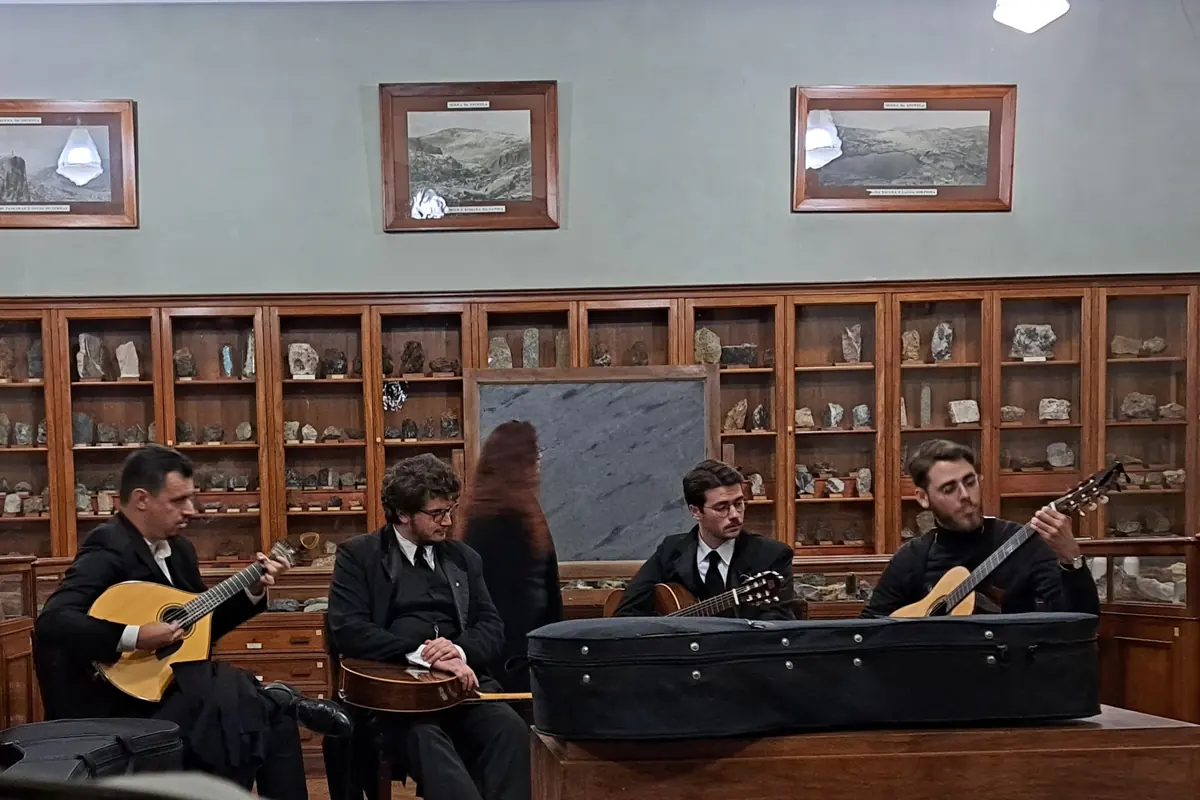
Wikipedia's article puts it plainly: a fado may take any subject, yet it keeps to an inherited structure. That structure lives in the standard fados, tunes that singers and players share, and a good guitarist, according to Wikipedia's article on the Portuguese guitar, should know at least a hundred of the more than two hundred standard fados in any key the singer asks for. New words are set to old shapes, which is why two songs with different lyrics can sound like close relatives. Listening for those shapes is the easiest way into the music.
Fado menor and fado maior
Wikipedia names the fado maior, the fado menor and the fado Mouraria as the technique basics a Portuguese guitarist masters first, before ornaments such as the trinado, a triplet flourish, and the characteristic vibrato. Maior and menor mean major and minor. Fado itself typically uses major or minor harmony and sometimes switches between the two within a melody or at a change of verse, so an ear for that shift tells you a lot about where a song is going emotionally.
Fado corrido
Portuguese Wikipedia tells the story of the early forms this way: the oldest fado is the sailors' fado, sung at the bow of a ship, and it became the model for the forms that followed, the fado corrido first among them. The corrido left its name on the instrument too. The tuning chiefly used on the Portuguese guitar was historically called the afinação do fado corrido, before it came to be known simply as the Lisbon or the Coimbra tuning depending on its pitch.
Fado Mouraria
Mouraria is one of the old Lisbon quarters, with Alfama and Bairro Alto, where Wikipedia says fado is believed to have begun in the early nineteenth century. The fado Mouraria carries the district's name, and so does a variant guitar tuning, the afinação da Mouraria, which Wikipedia lists among the variations of the older natural tuning, now largely out of practice. Portuguese Wikipedia adds that the first known fado singer, Maria Severa Onofriana, sang and played in the streets of Mouraria.
What the Portuguese guitar does
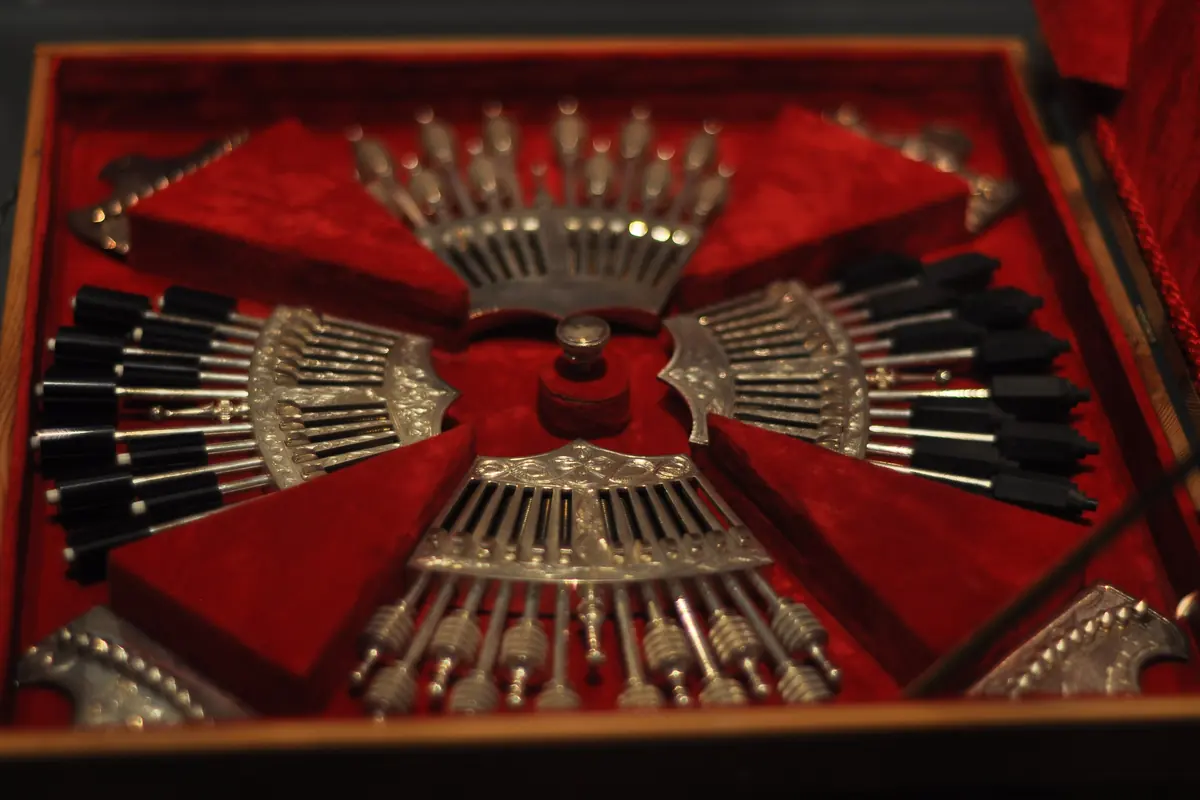
To UNESCO the guitarra is a Portuguese cittern, pear-shaped, with a dozen wire strings and a solo repertoire of its own. Its strings are paired in six courses, and its fan of watch-key tuners, the metal heads in the photograph, is a mechanism few instruments still use. In Lisbon-style accompaniment the guitarist plays the introduction, then replies to each sung line with short phrases of its own, and in quicker fados can even run free over the singer. Players pluck with the corner of a fingernail or a nail-shaped pick, which gives the Lisbon style its clear attack.
What the viola does
Fado players call the steel-strung classical guitar the viola. It shares the accompaniment with the Portuguese guitar, holding the chords and the beat so that the guitarra can ornament and reply. Some groups now add a second guitarra and a bass guitar, UNESCO observes, yet a singer with one guitarra and one viola remains the line-up most people picture.
Listening tips for your hour
None of this needs Portuguese. The shapes are audible from the first song, and by the third you will start to hear the same tunes returning with new words.
- Notice the guitar introduction: it often borrows from the second half of the vocal melody.
- Listen for rubato, where the music waits while the singer holds a note.
- Watch the guitarist answer each sung line.
- Expect an instrumental piece, a guitarrada, if the guitars are given a moment alone.
Frequently asked questions
Will I hear all three forms in one concert?
Not necessarily. The musicians choose the songs on the night, so this is a listening guide, not a set list.
Is the Portuguese guitar the same as a mandolin?
No. It is a cittern with twelve wire strings in six pairs, related to older European citterns, and it is unique to Portugal.
What is the difference between the Lisbon and Coimbra guitars?
Wikipedia lists a longer string length on the Coimbra model, a broader body on the Lisbon one, and a pitch difference: Lisbon guitars sit in D, Coimbra guitars a tone lower in C, with a darker colour.
Sources