Start here
Cais de Gaia fado: is it worth it?
What the hour-long fado concert on the Gaia riverfront includes, who it suits, what you hear, the glass of port, and who should book something else.
Choose your night on the Cais ↗Quick answer
Yes, if you want to hear fado sung well, at close range, in about an hour. The concert takes place in a small room on the Cais de Gaia, with professional Porto musicians, a glass of port (or water or juice) poured first and the old town of Porto across the river. It is a seated, silent concert rather than a dinner, the songs are in Portuguese, and the venue is not suitable for wheelchair users.
The short answer
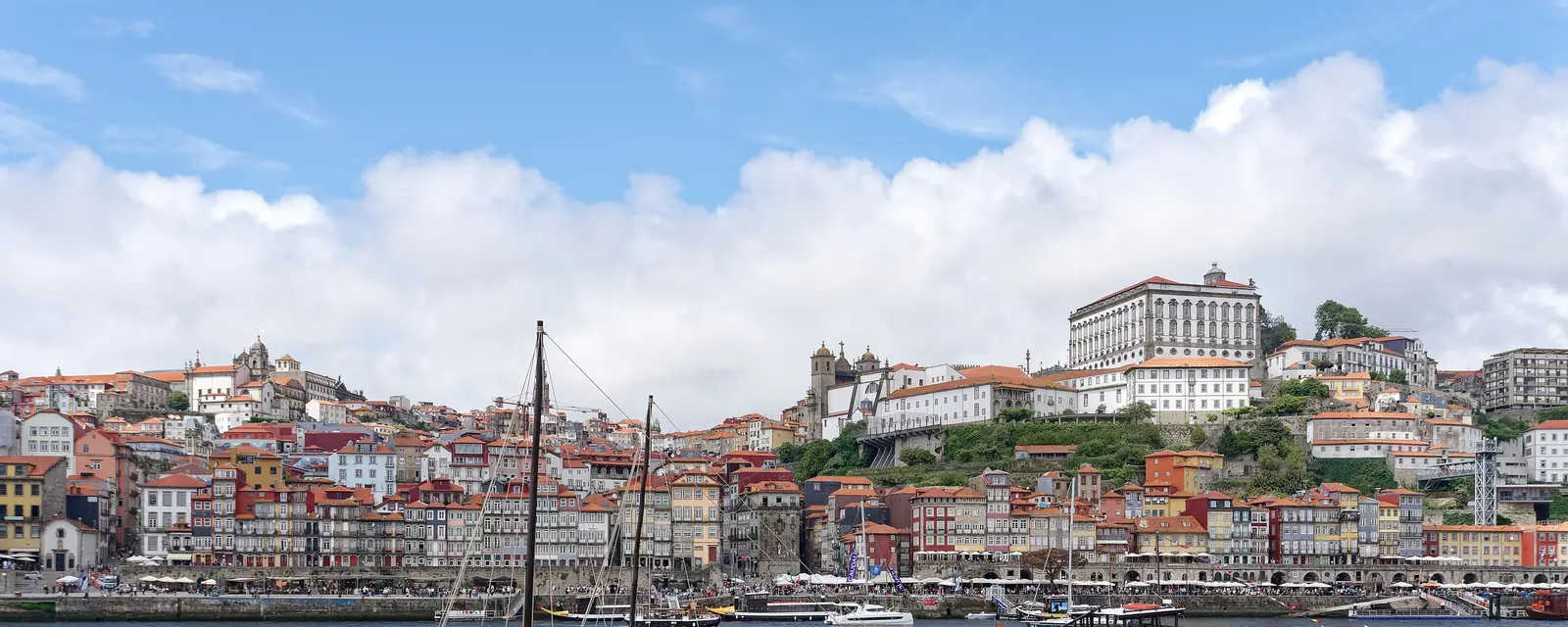
Book it if fado is on your list for Porto and you would rather spend one focused hour on it than a long evening. The format is simple: a short welcome with your glass, then roughly fifty minutes of music in a small room, close enough to see the guitarists' hands. Reviews return again and again to the voice and the two guitarists. Look elsewhere if food matters as much as music, if a wheelchair user is coming with you, or if a companion would struggle with an hour of quiet. Everything below explains why, and what you will actually hear.
Fado in one paragraph
Fado is a Portuguese song form that Wikipedia traces to the 1820s in Lisbon, where it is believed to have grown in bohemian districts such as Alfama, Mouraria and Bairro Alto. The name comes from the word for fate. In popular belief its tunes are mournful and its lyrics turn to the sea, the life of the poor and resignation, loosely gathered in the Portuguese word saudade. On 27 November 2011 fado joined UNESCO's lists of intangible cultural heritage, and professionals now sing it on the concert circuit as well as in small fado houses.
Read next: Why Porto has fado too
What happens in the hour
You walk along the Cais de Gaia, the riverside promenade lined with port cellars, and show your ticket at the riverside club building where the concert is checked in. A glass of port is poured first; if you don't drink, ask for water or juice instead. The room then settles and the concert begins, running for about fifty minutes. Door to door it is about an hour, which leaves room for a meal on either side or an afternoon in the lodges first. The booking calendar lists which nights are free and when each begins.
Who is on stage
Professional musicians from Porto perform, and the venue itself is a project started by two of them, backed by the neighbourhood where they live and work. Reviews describe a singer accompanied by two guitarists, which is the classic shape of fado. UNESCO's account of the genre has one voice, a woman's or a man's, supported by an acoustic guitar with wire strings and by the guitarra, Portugal's own twelve-string, pear-shaped cittern. Expect that line-up rather than a band. This guide names no performers; the music is the point.
What traditional fado means here
The concert is sold as traditional fado, and in practice that means three things. The music is acoustic and performed up close. The songs are in Portuguese, sung to the old structures that Wikipedia describes: fado can be about anything, but it follows a set traditional form. And the audience listens in silence. The Fado Museum describes how hearing fado became a ritual in the fado houses of Lisbon's historic neighbourhoods, especially from the 1930s. Nobody will translate each verse for you. You follow the feeling through the voice, the pauses and the way the Portuguese guitar answers each line.
The glass of port and the view
The glass in your hand is port, the fortified wine that has been aged in the cellars along this very quay; until 1986 it could only be exported from Vila Nova de Gaia, according to Wikipedia. Water or juice is offered instead if you prefer. The room looks across the Douro to Porto's historic centre, which went on UNESCO's World Heritage list in 1996; the same inscription takes in the Luiz I Bridge and, on the Gaia hill, the monastery of Serra do Pilar. Arrive a little early and look across before you go in: the stacked houses of the Ribeira are the backdrop to the evening.
The house rules, and why they exist
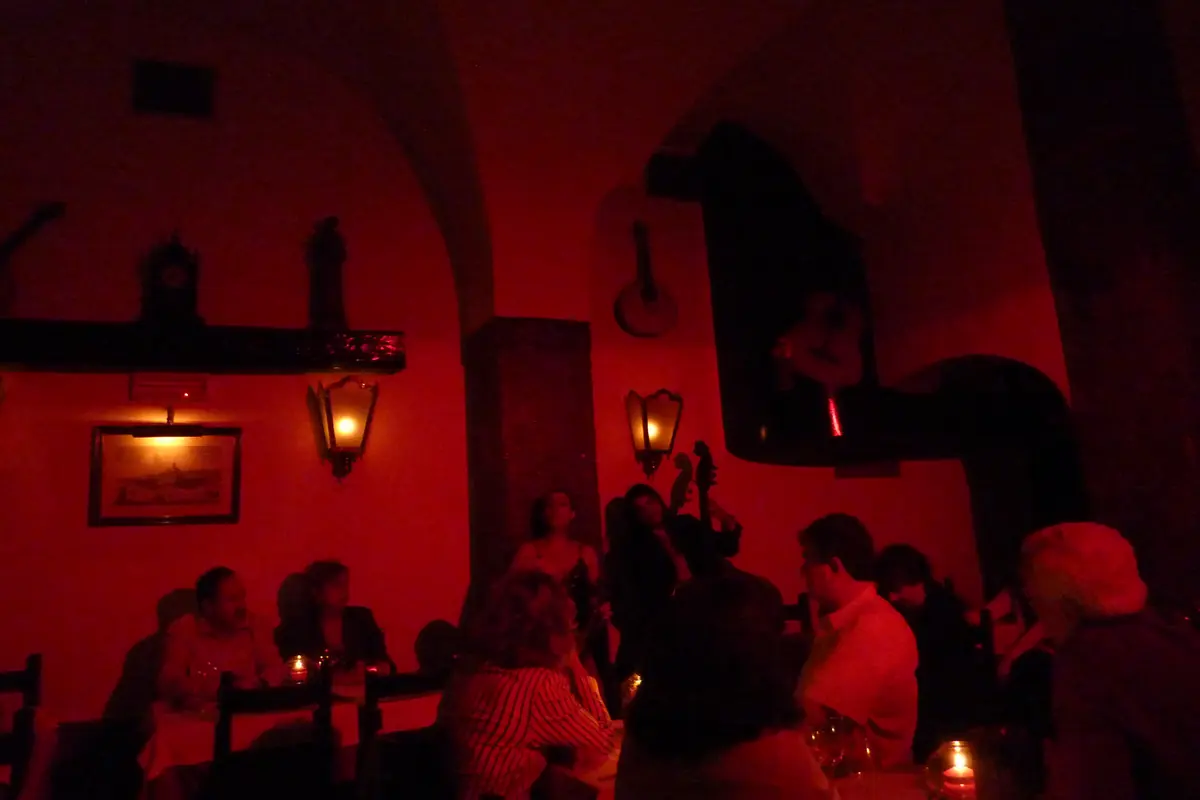
Silence is asked of everyone for the whole performance, and flash photography and torches are not allowed. That can feel strict if you are used to bar music, but fado is an intimate acoustic form, sung close to the listeners, and a single phone flash or whispered conversation carries across a small room. Take your photos of the river before or after. If you want to keep a memory of the music, buy a recording of fado you liked afterwards rather than filming; the Fado Museum's digital sound archive is a good place to start.
Tickets, reductions and cancellation
Through GetYourGuide, cancelling a day or more before the concert brings the whole payment back, and seats can be held now and paid for later. There are reductions for children, students and groups; choose the ticket types in the calendar to see what applies to your date. The live price appears in your currency before you pay, so this guide leaves figures out. A concert ticket here is a modest outlay next to a dinner-and-show evening, and that helps make it a low-risk first taste of fado.
Who this isn't for
None of that is a criticism of the concert; it is simply a listening room, and it works best for people who come to listen. If one of these describes your party, a lodge tasting or a river cruise from the same quay may suit you better, and both are bookable from this site's homepage. A lodge tasting in particular gives you port and conversation at your own pace, which a fado room deliberately does not.
- Wheelchair users, since the room cannot accommodate them.
- Travellers who want dinner with the music: no food is served as part of the ticket.
- Small children who can't sit quietly for most of an hour.
- Groups who want to chat over drinks while music plays in the background.
How it compares with other Douro evenings
The real alternative on this bank is a boat. A sunset sail with port wine lasts about two hours, stays outdoors and depends on the river; the fado hour is indoors, shorter and centred on the music. A port tasting in one of the Gaia lodges is a natural first step before the concert rather than a rival to it. If you are torn between the music and the water, the comparison guide sets the two evenings side by side, with who each one suits.
Read next: Fado hour or Douro sunset sail?
Booking it well
Settle the date before anything else, look up that night's start in the calendar, and plan dinner and the river on either side of it. The lower deck of the Dom Luís I Bridge is the simplest way across from the Porto bank, and it lands you on the Gaia waterfront among the port lodges. Leave yourself time to find the riverside club building where tickets are shown, since the quay is busy in the evening. If the forms and words of fado are new to you, a few minutes with the guide to fado menor, corrido and Mouraria will make the hour richer.
Read next: Fado menor, corrido and Mouraria
Frequently asked questions
How long does the fado hour take?
Plan on roughly an hour: a short welcome with the port, then around fifty minutes of music. Each night's start is listed in the calendar and on your confirmation.
Do I need to know Portuguese?
No. The songs are in Portuguese, but fado is built on the voice and the guitars as much as the words. Reading a little about saudade and the main fado forms beforehand helps.
Is food served?
No. The ticket includes the concert, a seat and a glass of port, or water or juice. Plan a meal before or after.
Can I bring children?
Yes, and there are reductions for children. Silence is requested during the music, so it works for children happy to stay quiet for most of an hour.
Is the venue accessible?
No; wheelchair users can't be accommodated in the room. For step-free access, look at the port and cheese tasting in a Gaia lodge on the homepage, which is wheelchair accessible.
What if my plans change?
Yes. Cancel through GetYourGuide at least 24 hours before the music starts and the money comes back in full; reserving now and paying later is allowed too.
Sources
- UNESCO's 2011 inscription of fado
- The Fado Museum in Lisbon on the history of the genre
- Wikipedia's fado article: origins, varieties, the UNESCO date
- Wikipedia on the Portuguese guitar: models, technique, tuning
- Wikipedia on Porto and its listed historic centre
- Wikipedia on port: styles, ageing and the Gaia lodges